

[ad_1]
AI workloads are pushing rack densities far beyond what traditional air cooling can handle, and Data Center Cooling Suppliers are suddenly a lot more important to get right. The wrong choice doesn’t just hurt your PUE ratio. It can mean unplanned outages, runaway energy costs, and a facility that can’t keep pace with the next hardware refresh cycle.
After reviewing dozens of suppliers across liquid cooling, HVAC, and process systems, the patterns around what actually works became clear. This guide covers seven suppliers worth knowing, from hyperscale liquid cooling specialists to industrial-grade component distributors.
How this ranking was put together
Public information was pulled from official websites, verified case studies, and product documentation, with only suppliers showing a real track record in data center infrastructure making the final cut.
→ See the full research breakdown
- CSI Store – Best for data center liquid cooling fabrication and sanitary process systems
- CoolIT Systems – Best for AI and HPC data center cooling
- STULZ – Best for data center cooling and humidity control
- Schneider Electric – Best for enterprise energy management and data center infrastructure
- MSC Industrial Supply – Best for industrial MRO and metalworking supplies distribution
- McMaster-Carr – Best for industrial equipment and component procurement
- Daikin Applied – Best for commercial and industrial HVAC systems, data center cooling infrastructure
Why Data Center Cooling Suppliers Are Worth a Closer Look
GPU-accelerated workloads and AI compute clusters are generating heat densities that older air-cooled designs simply weren’t built for. Full stop.
Picking the right supplier means getting access to systems that can actually scale with those demands, not just what was spec’d for a facility five years ago. The pressure to cut carbon footprints and hit ASHRAE A1-A4 thermal guidelines adds another layer of challenge to every procurement decision.
A well-matched supplier brings the product depth and technical knowledge to address both the thermal load capacity challenge and the environmental mandate at the same time. That combination is what separates good outcomes from expensive do-overs. And it’s what shows up in better PUE ratios, lower WUE figures, and higher cooling capacity utilization rates across the board.
Comparing the 7 Best Data Center Cooling Suppliers
Note: All data in this table is sourced from review platforms and the official websites of the listed companies.
| Company Name | Years Operating | Headquartered In |
| CSI Store | Since 1977 | Springfield, MO |
| CoolIT Systems | Since 2001 | Calgary, Canada |
| STULZ | Since 1947 | Hamburg, Germany |
| Schneider Electric | Since 1836 | Rueil-Malmaison, France |
| MSC Industrial Supply | Since 1941 | Davidson, NC |
| McMaster-Carr | Since 1901 | Elmhurst, IL |
| Daikin Applied | Since 1924 | Plymouth, MN |
1. CSI Store – Best for Data Center Liquid Cooling Fabrication and Sanitary Process Systems
How Does CSI Store Operate?
CSI Store has been engineering and fabricating liquid process systems since 1977, and their data center work draws directly from that manufacturing depth. They build custom liquid-cooling skids with ASME Section IX-certified welding, which is exactly the kind of spec that matters when a cooling loop failure isn’t an option. Five US distribution centers stock sanitary fittings, pumps, valves, and specialty alloy tubing, so sourcing for fast-turnaround projects doesn’t become a bottleneck. Teams working with energy-efficient cooling solutions for data centers also get access to the CSI Reliability preventative maintenance program, which keeps systems running within spec rather than waiting for something to break.
What Sets CSI Store Apart for Data Center Cooling Suppliers?
CSI Store fills the fabrication-quality gap that arises when data center liquid-cooling projects require certified welding and Level II inspection, not just off-the-shelf components. That kind of in-house manufacturing control, backed by 45 years of process system experience, is genuinely hard to match in this space.
What Users Are Actually Saying:
Clients point to the depth of the distribution inventory and the quality of the fabrication work as the two things that keep them coming back. The nationwide distribution footprint gets mentioned consistently, especially for projects where lead time is the deciding factor. Honestly, the combination of certified welding and same-country stock availability is a real differentiator for US-based data center operators.
2. CoolIT Systems – Best for AI and HPC Data Center Cooling
How Does CoolIT Systems Operate?
CoolIT Systems builds direct liquid cooling hardware for AI compute and high-performance clusters. Their product line runs from cold plates and coolant distribution units (CDUs) to rack manifolds and full integrated cooling loops. The Rack DLC technology sits at the center of their offering, and it’s designed to push rack density and power output well beyond what air cooling can reach. Manufacturing spans Canada, China, and Vietnam, and their Liquid Lab Centers in Calgary and Taipei handle system design validation. Their systems currently cool seven of the top ten supercomputers globally, including the number one ranked El Capitan system (not a small claim to carry).
What Sets CoolIT Systems Apart for Data Center Cooling Suppliers?
CoolIT directly addresses the heat density problem created by modern GPU and AI accelerator workloads, where traditional cooling approaches hit their physical limits. Their proven deployments in top-tier supercomputing environments give procurement teams the kind of real-world validation that spec sheets alone can’t replicate.
What Users Are Actually Saying:
The recognition from Deloitte Technology Fast 500 and the Financial Times fastest-growing companies list reflects what the technical community has been saying about CoolIT for a few years now. Customers in hyperscale and HPC environments consistently point to the Rack DLC architecture and end-to-end service support as the reasons they chose CoolIT over competing liquid cooling options. Their credibility in high-stakes deployments is well-established.
3. STULZ – Best for Data Center Cooling and Humidity Control
How Does STULZ Operate?
STULZ has been building precision cooling equipment since 1947, and their focus on data center applications goes deeper than most HVAC manufacturers. Their product lineup covers computer room air conditioners (CRACs), liquid cooling systems, and chillers, all paired with monitoring software that gives facility teams real visibility into what the cooling infrastructure is actually doing. They operate across 21 subsidiaries and serve customers in more than 150 countries, which matters when a colocation operator has facilities across multiple regions. Their push toward low-GWP refrigerants also positions them well for facilities working against tightening EU Green Deal and ENERGY STAR requirements.
What Sets STULZ Apart for Data Center Cooling Suppliers?
STULZ covers the full cooling and humidity control picture together, which is something a lot of point-solution vendors miss. That pairing is especially relevant in environments where humidity drift can cause condensation issues just as damaging as thermal overload.
What Users Are Actually Saying:
STULZ doesn’t carry a lot of public review data at the enterprise level, which is pretty typical for B2B equipment suppliers of their scale. What does surface from industry conversations points to strong product reliability and the depth of their regional service network. The 75-plus-year operating history carries weight, and data center operators in global markets tend to treat that longevity as a proxy for parts availability and long-term support continuity.
4. Schneider Electric – Best for Enterprise Energy Management and Data Center Infrastructure
How Does Schneider Electric Operate?
Schneider Electric works across essential power, cooling, and rack infrastructure, and their EcoStruxure platform ties all of it together through IoT-enabled monitoring. For data center teams, that means real-time visibility into cooling performance, energy draw, and system health from a single architecture. Their cooling product line is built for high-density environments, and the EcoStruxure Apps, Analytics, and Services layer adds the kind of data reporting that facility managers need to hit PUE performance benchmarks. Being named the World’s Most Sustainable Company by TIME Magazine and Statista isn’t just a badge (though it is a useful one). It reflects a genuine product direction toward lower carbon footprints and ISO 14001-aligned operations.
What Sets Schneider Electric Apart for Data Center Cooling Suppliers?
Schneider solves the visibility problem by connecting cooling infrastructure to a broader energy management platform, so operators aren’t managing cooling in isolation from power and capacity planning. That full-picture approach is what makes them the go-to for enterprise data center operators who need reporting that spans the entire facility.
What Users Are Actually Saying:
Schneider’s recognition as a Top 100 Most Ethical Company for 13 consecutive years points to a consistency that enterprise procurement teams value when committing to long-term infrastructure partnerships. Users in large-scale deployments regularly cite EcoStruxure’s analytics depth and the breadth of the product portfolio as the reasons Schneider stays on the approved vendor list. Few suppliers can match both the product depth and the environmental track record at this scale.
5. MSC Industrial Supply – Best for Industrial MRO and Metalworking Supplies Distribution
How Does MSC Industrial Supply Operate?
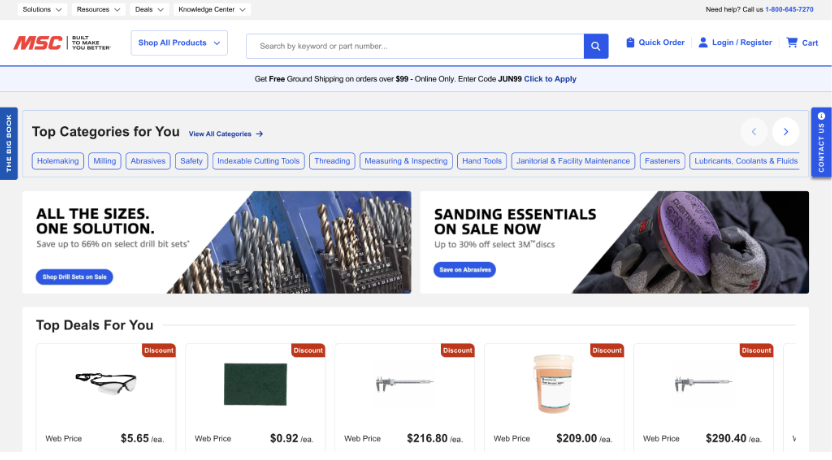
MSC Industrial Supply has been running MRO and metalworking distribution for over 80 years, with a catalog that stretches past 2 million products. For data center infrastructure teams, their value shows up in maintenance, repair, and operations sourcing, particularly where specialized components need to be tracked down fast. Their in-plant inventory management and vending reduce the procurement overhead that tends to slow down facility operations. The metalworking side of the business (45% of their total volume) signals a depth in precision components that carries over into data center maintenance work where tolerances matter.
What Sets MSC Industrial Supply Apart for Data Center Cooling Suppliers?
MSC fills the MRO gap for data center teams that need consistent access to industrial components without juggling dozens of niche suppliers. Their inventory management services around customized stocking take the administrative burden off facility teams who are already stretched thin managing cooling system reliability.
What Users Are Actually Saying:
MSC’s back-to-back Great Place to Work certification and the ISA Innovation Impact Award point to a company that runs tight internal operations, and that tends to show up in service consistency. Customers highlight the technical support team as a real differentiator, particularly for hard-to-source components. Their ability to combine product volume with application know-how keeps them well-regarded across industrial and facilities management teams.
6. McMaster-Carr – Best for Industrial Equipment and Component Procurement
How Does McMaster-Carr Operate?
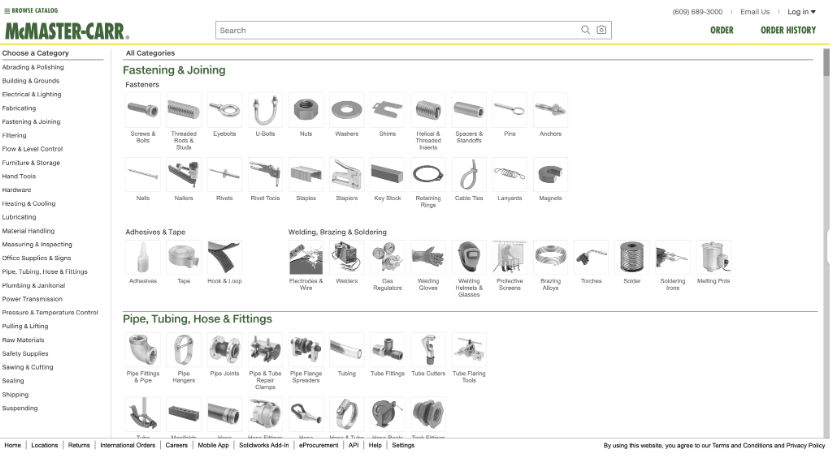
McMaster-Carr stocks more than 580,000 industrial products and ships 98% of them from stock, with next-morning delivery available for orders placed before 6 p.m. EST. For data center operations teams, that fulfillment speed is genuinely useful when a maintenance window opens up and a specific fitting or component becomes the thing holding everything up. No minimum order requirement and no restocking fees remove the procurement friction that slower suppliers create. CAD model downloads directly from the website save engineering time during system design, and live customer service representatives (no automated menus) make sourcing hard-to-find parts a lot less painful.
What Sets McMaster-Carr Apart for Data Center Cooling Suppliers?
McMaster-Carr solves the emergency procurement problem that data center teams face when a cooling component fails outside of a planned maintenance cycle. Their combination of inventory depth and next-day fulfillment is hard to match when the alternative is a multi-day lead time on a part holding up a repair.
What Users Are Actually Saying:
McMaster-Carr doesn’t generate the kind of formal case study reviews that enterprise infrastructure suppliers do, but their reputation among engineers and facilities teams is consistently strong. The live customer service model gets mentioned repeatedly as a standout, especially for sourcing unusual specifications. Honestly, in a world of automated support systems, the ability to talk to a real person who can actually find your part is rarer than it should be.
7. Daikin Applied – Best for Commercial and Industrial HVAC Systems, Data Center Cooling Infrastructure
How Does Daikin Applied Operate?
Daikin Applied designs and manufactures commercial-grade chillers, air handlers, and fan coils, with IoT-enabled monitoring built into the product line. Their PreciseLine air handler earned a gold award in the HVAC Commercial Equipment category, which reflects genuine product differentiation rather than just brand presence. For data center applications, their chiller portfolio handles the baseload cooling demands that high-density compute environments generate, and modular products give facility teams flexibility when scaling up. As part of Daikin Industries, the world’s largest air conditioning company at $30.8 billion in annual revenues, they bring supply chain depth and R&D investment that smaller HVAC brands simply can’t access.
What Sets Daikin Applied Apart for Data Center Cooling Suppliers?
Daikin Applied addresses the energy performance challenge at the chiller and air handler level, where the biggest operational cost savings in a data center cooling system are usually found. Their 24/7 service and rental capabilities add an operational continuity layer that matters for facilities where cooling redundancy is tied directly to reliability commitments.
What Users Are Actually Saying:
The gold award recognition for the PreciseLine air handler and the Engineered Systems Commercial Comfort Products of the Year nods reflect consistent product quality that industry reviewers have validated over time. Customers in commercial and data center environments point to the energy performance of the chiller line and the depth of the parts and service network as the reasons Daikin Applied holds a place in long-term infrastructure plans. The parent company’s global scale gives procurement teams confidence around parts availability over a 15-to-20-year equipment lifecycle.
Methodology Behind These Picks
Gathering Your Baseline Data
The starting point for this ranking was building a broad list of suppliers with documented activity in data center cooling. Sources included manufacturer directories, industry publication vendor guides, procurement platform listings, and product databases specific to thermal management equipment. The goal at this stage was coverage, pulling in both well-known names and less-publicized specialists to avoid anchoring the list on brand familiarity alone. Each candidate was noted with their product category, geographic reach, and any visible data center-specific positioning on their official website.
The Shortlist Cut
From the initial longlist, suppliers without verifiable product documentation or a clear data center cooling offering were removed. Review patterns were analyzed across available sources, looking for consistency in feedback rather than volume. Suppliers with thin or unverifiable track records in the specific application area were excluded regardless of their general brand reputation. This stage narrowed the field to suppliers with enough real-world signal to evaluate meaningfully.
Fact-Checking the Picks
Each shortlisted supplier’s website claims were cross-referenced against third-party sources including case studies, product awards, and publicly available technical documentation. Where a company described specific capabilities (certified manufacturing processes, system performance benchmarks, deployment credentials), those claims were checked against external references before being included in the final write-up. Claims that couldn’t be independently corroborated were either reframed or excluded.
Authority Signals and Industry Standing
Indicators of standing in the data center and thermal management space were assessed across each supplier. These included industry award recognition, mentions in engineering and infrastructure publications, membership signals in relevant standards bodies, and any published original research or white papers. Suppliers with multiple external authority signals across different sources were weighted more favorably than those relying solely on self-published materials.
Data Center Cooling Suppliers Track Record
The final evaluation layer assessed each company’s demonstrated commitment to data center cooling as a distinct service area, not merely a tangential application of a general product line. This included dedicated data center service or product pages, verified case studies from data center deployments, and reviews from facility managers or infrastructure architects. Suppliers with clear evidence of data center cooling work moved higher in the ranking than those with only general industrial or HVAC positioning.
Picking the Right Data Center Cooling Suppliers for You
Choosing from this list comes down to matching the supplier’s actual capabilities to the specific demands of your facility, your team’s technical resources, and your project timeline. Here are the five areas that tend to matter most in that evaluation.
- Industry/Domain Experience: Look for suppliers with documented deployments in environments similar to yours, whether that’s hyperscale, colocation, edge, or enterprise. A supplier with supercomputing deployments brings a different level of credibility than one with commercial HVAC experience, and both are valid depending on what you’re building.
- Features and Service Offerings: Match the product line to your thermal load capacity requirements. A CDU and cold plate specialist serves a different need than a chiller manufacturer or an MRO distributor. Be clear about whether you need fabrication, product supply, or system-level design support.
- Pricing Structure: Liquid-cooling fabrication and custom process systems have different cost structures than catalog-priced industrial components. Factor in total energy cost per kW of IT load cooled over the equipment lifecycle, not just the upfront capital figure.
- Results Measurement: Ask how each supplier measures and reports on system performance. PUE ratio improvements and cooling capacity utilization rates should be trackable through whatever monitoring or service program the supplier offers.
- Industry Knowledge and Compliance: Verify that the supplier understands ASHRAE A1-A4 thermal guidelines and can support ENERGY STAR or ISO 14001 reporting requirements if your facility operates under those frameworks.
The Verdict
For high-density server environments, the right data center cooling supplier depends on the specific thermal load-capacity challenge you’re addressing. CoolIT Systems stands out for AI and HPC liquid cooling at scale. STULZ and Schneider Electric cover the broader infrastructure picture with strong monitoring and environmental positioning. CSI Store brings fabrication depth and distribution reach that purpose-built liquid cooling projects need. As rack densities continue climbing, the suppliers who combine product specificity with technical service depth will carry the most value in the years ahead.