

[ad_1]
Recently, the Bureau of Labor Statistics was able to provide data that had been previously delayed due to the October government shutdown. With the mid-December data release, the Bureau has now brought its reporting up to date.
The latest data, which includes November’s results, suggests diverging labor trends between the broader economy and the construction industry specifically.
Broad measures of employment remain underwhelming. Total jobs fell by 105,000 in October, followed by a better—but still uninspiring—gain of 64,000 jobs in November.
Importantly, the national unemployment rate has risen in recent months, moving from 4.1% at mid-year to a November reading of 4.6%. Excluding the distortions caused by COVID-19, the last time total unemployment was this high was in February 2017, nearly eight years ago.
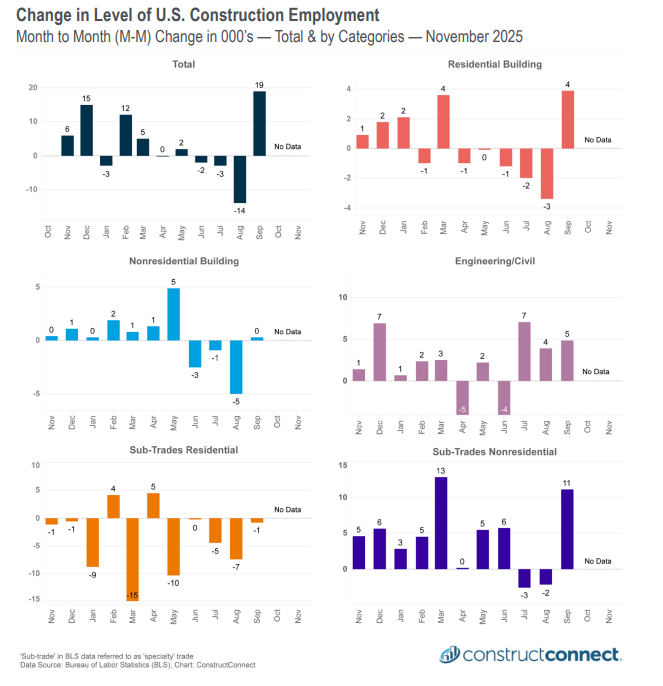
In contrast, labor tightness in the construction industry continues unabated, especially given seasonal trends. The latest construction unemployment rate, at a mere 4.1%, marks the third-lowest November reading since 2000.
To put this in perspective, the comparable average November unemployment rate since 2000 is 7.8%. However, labor demand within the industry remains uneven. Over the past three months, total residential jobs have contracted by 1,000 positions, while nonresidential job growth has increased by 29,000.