

Progress Billing Template – Electrical
$4.99
Use this template to submit a progress draw for your project.
Templates are starting points. Adapt them to your contract and to the laws and safety rules where you work. They are not legal advice.
Product FAQ
You will receive your documents and files immediately after you complete the checkout process. You will receive a link on the checkout page as well as via email.
As long as the document remains on Essential Construction you will be able to download it once purchased.
Yes, in most cases (with the exception of stock photography and ebooks) the files you will receive are editable.
We accept debit, all credit cards (Visa, Amex Mastercard etc) as well as payments via Apple Pay, Google Pay and Paypal.
Our return policy varies based on the product, for more information you can find our detailed return policy here.
Our documents are for use on your projects. You may not resell these documents on other marketplaces.
Full Description
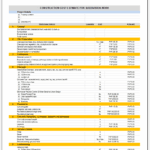
This progress billing template is set up for electrical works, so an electrical contractor or subcontractor can submit a progress draw on a project. It gives you a consistent format for showing what has been completed and what you are claiming for the period.
What is progress billing in construction?
Progress billing is a way of getting paid in stages as work is completed, instead of waiting until the end of the job. Each period, usually monthly, the contractor bills for the share of the contract value completed so far, less what has already been paid and any retainage. A progress billing template, also called a progress draw or progress payment claim, shows the contract value, percent complete, amount earned to date and the amount due now.
When to use it
- Monthly draws on electrical scopes for commercial, industrial or residential projects.
- Billing a general contractor under a subcontract with a schedule of values.
- Reaching a payment milestone set out in the contract.
- Updating the owner or lender on how much of the electrical scope is complete.
- Adding approved change orders to the amount billed.
What’s included
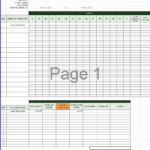
The download is a spreadsheet template for progress billing on electrical works, built for submitting a progress draw on your project. It gives you a structured place to set out your billing for each period, and because it is a spreadsheet you can adapt the line items to match the schedule of values in your contract.
How to fill it out
- Enter the project, contract and billing period details, plus your invoice or application number.
- List the electrical scope in line items that match your schedule of values, such as rough-in, feeders, panels, devices, fixtures and testing.
- Enter the scheduled value for each line and the percent complete to date.
- Subtract amounts billed in previous periods to get the amount for this period.
- Apply retainage as set out in the contract and show any approved change orders on separate lines.
- Check totals, attach backup such as photos or quantities, and submit by the billing cut-off date.
Common mistakes to avoid
- Billing ahead of the work actually installed. Over-billing damages trust and can delay approval.
- Mixing unapproved change orders into base contract lines.
- Missing the owner’s or GC’s billing cut-off date and waiting a month to be paid.
- Forgetting to track retainage so it can be released at completion.
Related templates and guides
- Construction Progress Billing Template
- Contractor Application For Progress Payment
- Construction Progress Billing Workflow
- Change Order Log Template
- Guide: Construction Financial Reporting
Frequently asked questions
What is progress billing in construction?
Progress billing means invoicing for work in stages as it is completed. Each period the contractor bills the value of work done to date, minus earlier payments and retainage. It keeps cash flowing on long projects and gives the owner a regular check on progress against the contract value.
How do you calculate percent complete for a progress bill?
Most contractors estimate percent complete for each line in the schedule of values, based on installed quantities, labor hours or milestones reached. Multiply the scheduled value by the percent complete to get the amount earned to date, then subtract what has already been billed.
What is retainage on a progress billing?
Retainage is a portion of each payment the owner or general contractor holds back until the work is complete, often in the range of 5 to 10 percent. The contract sets the rate and when it is released. Track it on each bill so the full amount can be claimed at closeout.
How often do you submit a progress bill?
Most construction contracts use monthly billing, with a cut-off date for submissions. Some contracts bill at set milestones instead, such as rough-in complete or final inspection. Check your contract or subcontract for the billing period, the format required and any backup the owner expects.
Can you bill for materials stored on site?
Some contracts allow billing for materials delivered and stored but not yet installed, often with proof of delivery, insurance and secure storage. Others do not. Check the payment terms first, and show stored materials on a separate line so they are easy to review.



Reviews
There are no reviews yet