

Project Specific Baseline Risk Assessment
$6.99
A safety risk assessment is required on a project in order to audit it and determine where you need to focus your efforts.
Templates are starting points. Adapt them to your contract and to the laws and safety rules where you work. They are not legal advice.
Product FAQ
You will receive your documents and files immediately after you complete the checkout process. You will receive a link on the checkout page as well as via email.
As long as the document remains on Essential Construction you will be able to download it once purchased.
Yes, in most cases (with the exception of stock photography and ebooks) the files you will receive are editable.
We accept debit, all credit cards (Visa, Amex Mastercard etc) as well as payments via Apple Pay, Google Pay and Paypal.
Our return policy varies based on the product, for more information you can find our detailed return policy here.
Our documents are for use on your projects. You may not resell these documents on other marketplaces.
Full Description
This site specific risk assessment template helps you carry out a baseline risk assessment at the start of a construction project and keep it up to date as the work changes. It gives your team a set format for identifying the safety hazards on your jobsite and deciding where to focus your effort.
What is a baseline risk assessment?
A baseline risk assessment is a broad, project-wide review of safety hazards carried out before or at the start of construction. It looks at the site, the planned activities, the people involved and the surrounding environment, rates each significant hazard, and sets the controls needed. The baseline becomes the reference point for the project’s safety planning. It is then reviewed when conditions change and supported by more detailed task-based assessments for specific activities.
When to use it
- At project start-up, before mobilizing crews and equipment to site
- When preparing or updating a site specific safety plan
- When the scope, sequence or site conditions change significantly
- Before a new phase of work, such as moving from excavation to structure
- When a client or principal contractor asks for a project-specific assessment
What’s included
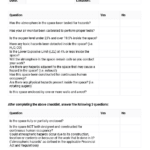
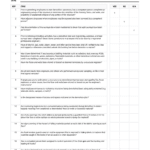
The download is an editable Word document (.docx) for a project specific baseline risk assessment. It follows a prescribed format so the assessment is done the same way on every project, and is used to identify the safety hazards and areas of concern on your site at the beginning of the project and throughout construction.
How to fill it out
- Enter the project details and the people taking part in the assessment.
- Walk the site and review the drawings, schedule and method statements.
- List the main activities and the hazards linked to each, such as work at height, excavations, lifting, plant movement, live services and public interface.
- Identify who could be harmed and how.
- Rate each risk for likelihood and severity using your company’s risk matrix.
- Set controls in order of effectiveness: eliminate, substitute, engineer, administer, then personal protective equipment.
- Assign an owner and a target date to each control and re-rate the residual risk.
- Share the findings with supervisors and crews, and set a date to review the assessment.
Tips
- Involve foremen and subcontractors. They know the real hazards of their work.
- Focus on significant risks rather than listing every minor one.
- Link high-risk items to task-level job hazard analyses and work permits.
- Review the assessment after any incident or near miss.
Related templates and guides
- Site Specific Safety Plan
- Job Hazard Analysis Form
- Safety Activity Risk Assessment
- Hazard Identification Form
- 10 Common Questions About Safety Plans Answered
Frequently asked questions
What is a site specific risk assessment?
A site specific risk assessment identifies the hazards of one particular project and location, rather than relying on a generic assessment. It considers the actual site layout, ground conditions, neighbors, access, services and planned work, and sets controls that fit that site. It is usually prepared before work starts and updated as the project changes.
What are the three types of risk assessment?
Many construction and mining safety systems use three levels: a baseline assessment of the whole project or operation, an issue-based assessment when something changes or a new hazard appears, and a continuous or task-based assessment done before specific jobs. Other systems describe types differently, such as generic, site specific and dynamic.
How do you conduct a construction site risk assessment?
Identify the hazards from a site walk and the project documents, decide who could be harmed and how, rate the risks, put controls in place, record the findings and review them regularly. Involve supervisors and workers, and update the assessment when the work, site or crews change.
What are the 5 risk rating levels?
Many companies use a five-by-five risk matrix that combines likelihood and severity into ratings such as very low, low, medium, high and very high or extreme. The exact labels and scores vary between companies, so use the matrix set out in your own safety management system.
How often should a baseline risk assessment be reviewed?
Review it at set points during the project, such as the start of each major phase, and whenever there is a significant change in scope, methods, site conditions or crews. Also review it after an incident or near miss. Record the review date and any changes made.






Reviews
There are no reviews yet